At its core, the Montessori Method is about trusting children to learn the way they’re naturally wired to. Developed by Dr. Maria Montessori in the early 1900s, it’s a child-centred approach that follows your child’s own curiosity and pace, using hands-on materials, mixed-age classrooms, and long, uninterrupted stretches of independent work to build focus, confidence, and genuine love of learning. Instead of telling children what to think, Montessori teaches them how to think, and the outcomes show up across academics, social skills, and emotional growth alike.
We know “Montessori” gets thrown around a lot these days, sometimes correctly, sometimes not so much. So let’s slow things down and actually explain what it means, where it came from, and what it looks like day-to-day for a child in one of our classrooms here at The Montessori Child Development Centre in Edmonton.
By the end of this guide, you’ll understand the method well enough to know exactly what to look for (and what to ask about) when you’re choosing a program for your own child.
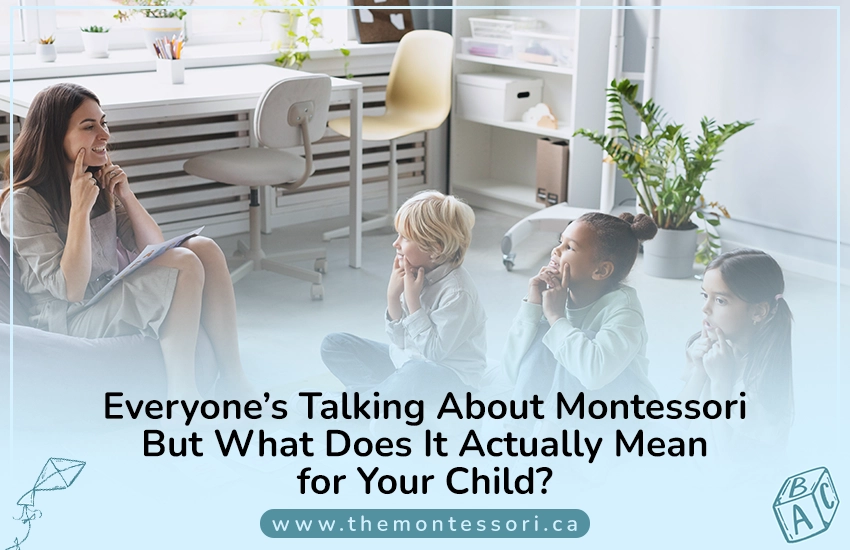
Everyone’s Talking About Montessori — But What Does It Actually Mean for Your Child?
“Montessori” has become a bit of a buzzword, appearing in everything from toy packaging to preschool signs. So before we go further, let’s ground everything in what the method actually is.
What Is the Montessori Method?
Montessori is an educational approach built around letting children direct their own learning, with carefully prepared materials and a trained guide supporting them along the way. Instead of a teacher standing at the front of a room delivering lessons to the whole class at once, children work individually or in small groups, choosing activities that match where they are developmentally.
Who Was Dr. Maria Montessori — And Why Does Her Work Still Matter Today?
Dr. Maria Montessori was an Italian physician and educator who, over a century ago, began observing how children naturally learn when given freedom and the right tools. Her findings were so consistent and so widely replicated that the method she developed is still used in thousands of schools across the world today, including right here in our own classrooms.
How Montessori Education Differs From Traditional Schooling
Traditional schooling tends to be teacher-led, with a fixed schedule and the same lesson delivered to every child at the same time. Montessori flips that around, the child leads, the environment is prepared in advance, and the teacher’s job is to guide rather than direct.
What Does “Child-Led Learning” Actually Look Like in Practice?
In practice, it means a child chooses their own work from a range of prepared activities, spends as much time on it as they need, and moves at their own pace instead of being rushed to keep up with the group. A guide observes closely and steps in only when needed, offering a new lesson once a child is ready for the next challenge.
Is Montessori a Philosophy, a Curriculum, or Both?
Honestly, it’s both. Montessori is a philosophy about how children develop and learn best, and that philosophy is expressed through a very specific, sequenced set of materials and activities that form the “curriculum” side of things.
Why “Help Me Do It Myself” Is the Heart of Everything Montessori Does
This one phrase sums up the entire method. Every material, every lesson, and every classroom routine is designed to give children just enough support to succeed on their own, building real independence and self-belief along the way.
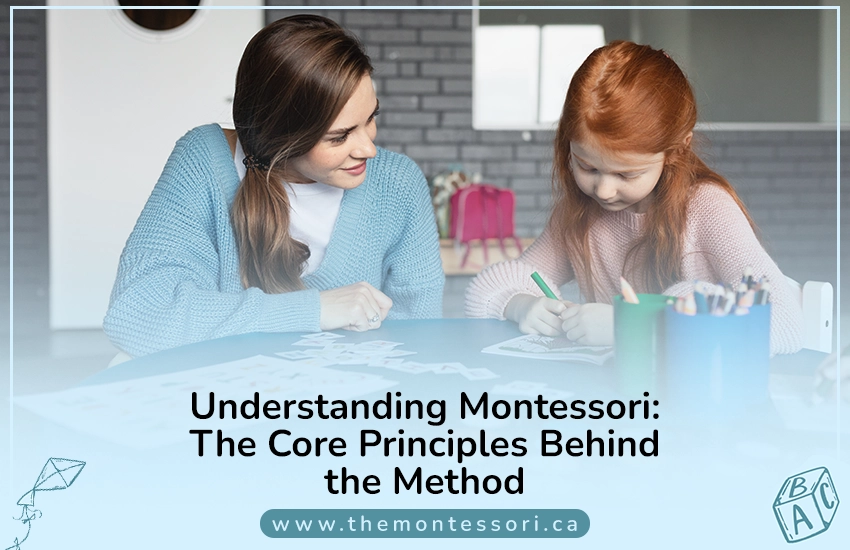
Understanding Montessori: The Core Principles Behind the Method
Once you understand the five core principles behind Montessori, the whole approach starts to make a lot more sense.
Principle 1 — The Prepared Environment: Why the Classroom Itself Is the Teacher
In a Montessori classroom, everything is intentionally placed, child-sized furniture, open shelves, materials in a logical sequence, so children can explore independently without constantly needing an adult’s help. The environment itself does a lot of the teaching.
Principle 2 — The Three-Hour Work Cycle: What Uninterrupted Focus Does for a Child’s Brain
Montessori classrooms build in long, uninterrupted blocks of work time, ideally around three hours, so children can fully settle into an activity without being rushed to the next thing. This uninterrupted focus is where deep concentration and real learning actually happen.
Principle 3 — Mixed-Age Classrooms: How Older Children Teach and Younger Children Aspire
Classrooms typically span a three-year age range. Older children reinforce their own learning by helping younger ones, and younger children get a natural, low-pressure preview of what’s coming next. It builds a genuine sense of community, too.
Principle 4 — The Montessori Guide vs. a Traditional Teacher: What’s the Difference?
A Montessori “guide” observes each child closely and introduces new lessons at exactly the right moment for that individual child, rather than delivering the same lesson to everyone on the same day. It’s a much more personalized style of teaching.
Principle 5 — Freedom Within Limits: How Children Choose Their Work — and Learn Responsibility
Children get to choose their own activities, but always within a clear, consistent structure. This balance of freedom and boundaries is what teaches real responsibility, not just compliance.
What Are the Planes of Development — And Why Does Montessori Build Around Them?
Dr. Montessori identified distinct stages of development, each with its own needs and sensitivities, and built the entire method around meeting children exactly where they are at each stage.
- First Plane (Birth–6 Years): The absorbent mind, when children soak up everything around them almost effortlessly
- Second Plane (6–12 Years): The reasoning mind, when children start asking “why” and exploring big ideas through the cosmic curriculum
First Plane (Birth–6 Years): The Absorbent Mind
During this stage, children absorb language, culture, and skills almost like a sponge, without even trying. This is why hands-on, sensory-rich materials matter so much in our Toddler and Pre-School classrooms.
Second Plane (6–12 Years): The Reasoning Mind and the Cosmic Curriculum
By age six, children shift from absorbing to reasoning, they want to understand how and why things work. Our After-School Program builds on this shift through the “cosmic curriculum,” connecting math, language, science, and history into one big, meaningful picture.
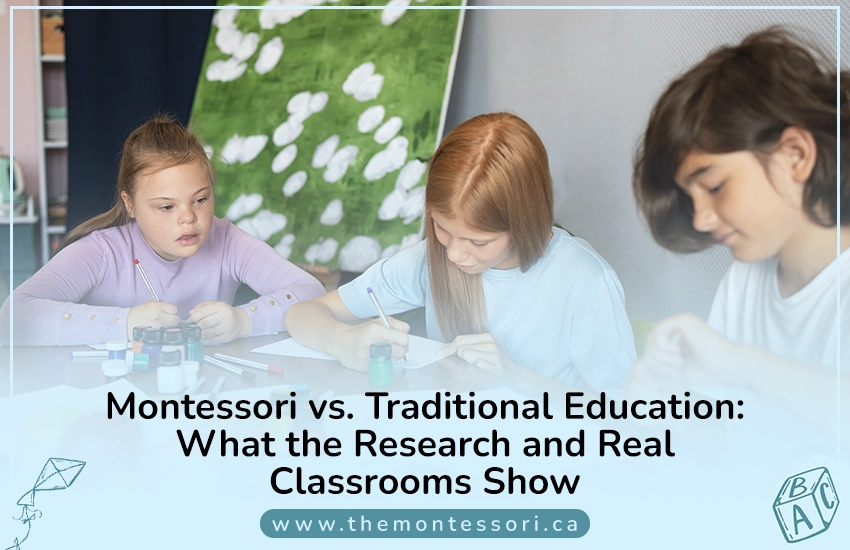
Montessori vs. Traditional Education: What the Research and Real Classrooms Show
What does Montessori actually look like compared to a traditional classroom, and how do you separate the real thing from something that’s just borrowing the name?
What Does a Montessori Classroom Actually Look Like?
Picture open, uncluttered shelves at child height, natural materials instead of plastic, small groups working quietly side by side, and very little of the “whole class facing the front” setup you’d expect from traditional schooling. It’s calm, purposeful, and genuinely child-sized.
Montessori Materials: Why Hands-On Learning Tools Beat Worksheets
Montessori materials are self-correcting, meaning a child can see for themselves when something isn’t quite right and try again, without needing an adult to point it out. That hands-on, tactile approach builds understanding on a much deeper level than a worksheet ever could.
What Academic Skills Does Montessori Build? Reading, Writing & Math — the Montessori Way
Reading, writing, and math are all introduced through concrete, hands-on materials before children move to abstract symbols, so concepts genuinely click instead of being memorized. It’s a slower start on paper, but it tends to build much stronger foundations.
Cursive and Print Handwriting in Montessori: Why It’s Taught and How
Many Montessori programs, including ours, teach both cursive and print, since forming letters by hand (rather than typing) strengthens fine motor skills and memory. Cursive is also often introduced early, as its flowing motion can actually be easier for little hands than print.
What Life Skills Does Montessori Develop? Independence, Concentration & Self-Discipline
Beyond academics, Montessori builds practical life skills, pouring, buttoning, cleaning up after yourself, that translate directly into independence, concentration, and self-discipline at home too.
Social & Emotional Development in Montessori: Empathy, Cooperation & Conflict Resolution
Because children work closely together across different ages, they naturally practice empathy, patience, and cooperation every single day. Conflict resolution is treated as a real skill to be taught, not just something to be shushed and moved past.
Common Montessori Myths — Debunked
There’s a lot of misinformation floating around about what Montessori actually is. Let’s clear a few things up.
Myth: “There Are No Rules in Montessori”
Not true at all. Montessori classrooms actually run on very clear, consistent expectations, freedom exists within firm limits, not instead of them.
Myth: “Montessori Is Only for Gifted or Wealthy Children”
Montessori was originally developed for children in underserved communities in Rome, and today it works well for children of all backgrounds and ability levels, including families who qualify for government subsidy.
Myth: “Children Won’t Be Prepared for Regular School After Montessori”
In reality, Montessori children tend to transition into traditional school settings smoothly, often bringing stronger independence, focus, and problem-solving skills with them.
Myth: “Montessori Doesn’t Teach Real Academics”
Montessori covers reading, writing, math, science, and more, often earlier and more deeply than traditional programs, just through hands-on materials instead of worksheets and lectures.
What Does AMI-Certified Mean — And Why Does It Matter When Choosing a School?
AMI (Association Montessori Internationale) certification is the gold standard for Montessori teacher training, founded by Dr. Montessori’s own son to protect the integrity of her method. When a school’s teachers are AMI-trained, like ours at The Montessori Child Development Centre, you know they’ve been trained to a genuinely rigorous, authentic standard.
Montessori-Inspired vs. True Montessori: How to Tell the Difference
“Montessori-inspired” programs may borrow a few materials or ideas without following the actual method, while a true Montessori program follows the full philosophy, trained guides, prepared environment, mixed ages, uninterrupted work cycles, and all. Always ask about staff training and classroom structure to know which one you’re actually looking at. You can explore how each of our own age groups apply the real method across our Toddler Program, Pre-School Program, and After-School Program.

Montessori in Edmonton: What The Montessori Child Development Centre Offers Your Child
Now that you understand the method itself, here’s what it actually looks like for your family right here in Edmonton.
Is Montessori Right for Your Child? Signs Your Child Will Thrive
Every child learns differently, and Montessori is designed to nurture each child’s natural curiosity, confidence, and love of learning. While every child is unique, you may notice these qualities in children who particularly enjoy the Montessori approach:
- Curious and eager to explore
- Enjoys hands-on learning and discovery
- Likes making simple choices independently
- Responds well to calm, consistent routines
- Learns by observing, trying, and doing
- Shows interest in practical everyday activities
- Enjoys working at their own pace
- Develops confidence through independence
What Kind of Child Does Best in a Montessori Environment?
Kids who like working independently, who enjoy repetition and mastering a skill at their own pace, and who benefit from a calm, orderly space all tend to flourish here. Even energetic or easily distracted children often settle in well once they find a rhythm.
Montessori for Toddlers (19 Months–3 Years): Building Independence From the Start
Our Toddler Program welcomes children as young as 19 months, focusing on trust, care, and independence through hands-on activities and gentle exploration in a safe, prepared space.
Montessori Pre-School (3–6 Years): Preparing for Academic Life Naturally
In our Pre-School Program, children aged three to six dive into reading, writing, math, and general knowledge through Montessori materials, building genuine curiosity and critical thinking as they prepare for the school years ahead.
Montessori After-School Program (6–12 Years): The Cosmic Curriculum in Action
Our After-School Program continues the method for children aged six to twelve, weaving math, language, arts, science, and social studies together through the cosmic curriculum, all built around the second plane of development.
What Questions to Ask When Visiting a Montessori Centre in Edmonton
When you tour a Montessori centre, it’s worth asking:
- Are the teachers AMI-trained or otherwise certified?
- What does a typical three-hour work cycle look like here?
- How are the classrooms organized by age?
- What’s included in tuition, and what costs extra?
Why The Montessori CDC Stands Out: AMI-Trained Staff, Low Capacity & No Hidden Fees
At our centre, every classroom is guided by AMI-trained teachers, kept at a low capacity so each child gets real individual attention. We also don’t charge extra for outdoor field trips, toilet training, or registration, and we include wholesome meals and snacks at no additional cost. You can see our Room Schedule or hear directly from other families.
Government Subsidy Available: What Edmonton Families Should Know
Our centre is fully licensed, and families who qualify can access subsidy support through the Ministry of Children and Family Development, making quality Montessori education more accessible for Edmonton families.
How to Register Your Child at The Montessori Child Development Centre
Ready to see it for yourself? You can start your child’s enrollment anytime through our simple Registration Form, and our team will take it from there.
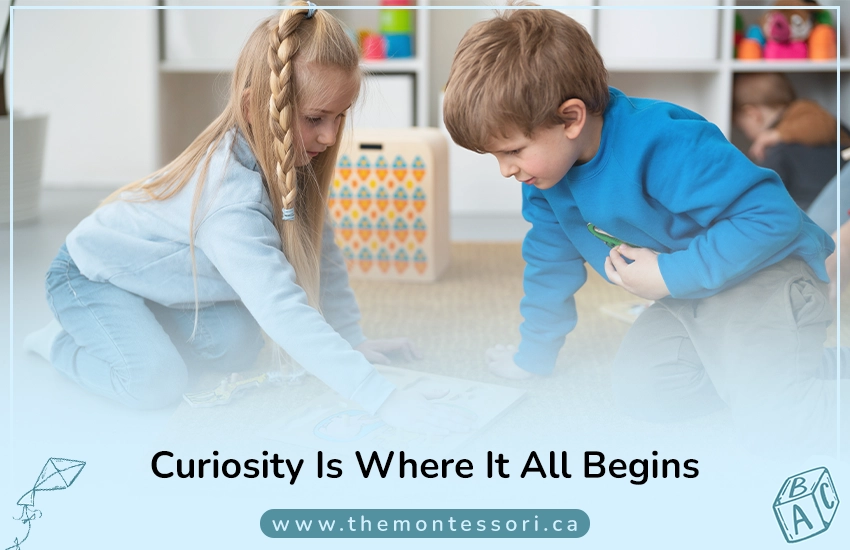
Curiosity Is Where It All Begins
Your child is born curious. Montessori is built around that curiosity, and here at The Montessori Child Development Centre in Edmonton, that’s exactly where it comes to life.
Our AMI-trained teachers, low-capacity classrooms, and inclusive programs from 19 months to 12 years give every child the individual attention they deserve. Government subsidy is available for qualifying families, with no registration fees and no hidden costs.
FAQs
What is the Montessori Method in simple terms?
It’s a child-led approach to education where kids learn through hands-on materials and independent exploration, guided (not directed) by a trained teacher, at their own natural pace.
How is Montessori different from traditional preschool or daycare?
Traditional programs are typically teacher-led with a set schedule for the whole group, while Montessori lets each child choose their own work and move through material at their own pace, within a carefully prepared environment.
What are the 5 core principles of Montessori education?
The prepared environment, the three-hour work cycle, mixed-age classrooms, the Montessori guide’s role, and freedom within limits.
What does a Montessori classroom actually look like?
Open, child-sized shelves with natural materials, small groups working quietly and independently, and very little “whole class” instruction.
What is the three-hour work cycle in Montessori?
It’s an extended, uninterrupted block of time where children can fully immerse themselves in an activity without being rushed to switch tasks.
Why are Montessori classrooms mixed-age?
Mixed-age groupings let older children reinforce their learning by mentoring younger ones, while younger children get a natural preview of what’s ahead.
What is the difference between a Montessori guide and a regular teacher?
A Montessori guide observes each child individually and introduces new lessons exactly when that child is ready, rather than teaching the same lesson to the whole class at once.
What academic skills does Montessori teach — reading, writing, and math?
Yes, all three, along with science, geography, and more, introduced through concrete, hands-on materials before moving to abstract concepts.
Does Montessori prepare children for regular school?
Yes. Montessori children typically transition smoothly into traditional schooling, often with stronger independence and problem-solving skills.
What is AMI certification and why does it matter?
AMI (Association Montessori Internationale) is the internationally recognized gold standard for authentic Montessori teacher training, ensuring educators are trained to the method’s original, rigorous standard.
What is the difference between true Montessori and Montessori-inspired programs?
True Montessori programs follow the complete method, trained guides, prepared environment, and mixed-age classrooms, while “Montessori-inspired” programs may only borrow a few materials or ideas without the full approach.
At what age can a child start a Montessori program?
Many programs, including our Toddler Program, welcome children as young as 19 months, right through to age 12 in after-school programming.
Is Montessori right for every child?
Most children adapt well to Montessori, though it tends to be an especially strong fit for curious, hands-on learners who benefit from gentle structure.
Is government subsidy available for Montessori daycare in Edmonton?
Yes, qualifying families can access subsidy support through the Ministry of Children and Family Development at our fully licensed Edmonton centre.
How do I register my child at The Montessori Child Development Centre in Edmonton?
Simply fill out our online Registration Form, and our team will guide you through the rest of the enrollment process.