Every parent wants the best for their child. But did you know that some of the most important learning happens before your child even starts Grade 1? Between ages three and six, a child’s brain grows the fastest. What your child learns and how they feel during these early years can affect the rest of their life. That’s why preschool education matters so much more than most people think.
Some parents wonder if preschool is really necessary. Will kids just learn everything once they start “real school”? The answer, backed by years of research, is no. Children who go to a good preschool do better in school, make friends more easily, and grow up to be more confident and successful. These aren’t small benefits. They last a lifetime.
At The Montessori Daycare: Child Development Centre in Edmonton, we believe every child is born ready to learn. Our Pre-School Program is built to match how children naturally grow and explore. We don’t push kids to learn. We create an environment where learning feels exciting, natural, and fun because giving your child a great start isn’t just about school. It’s about life.
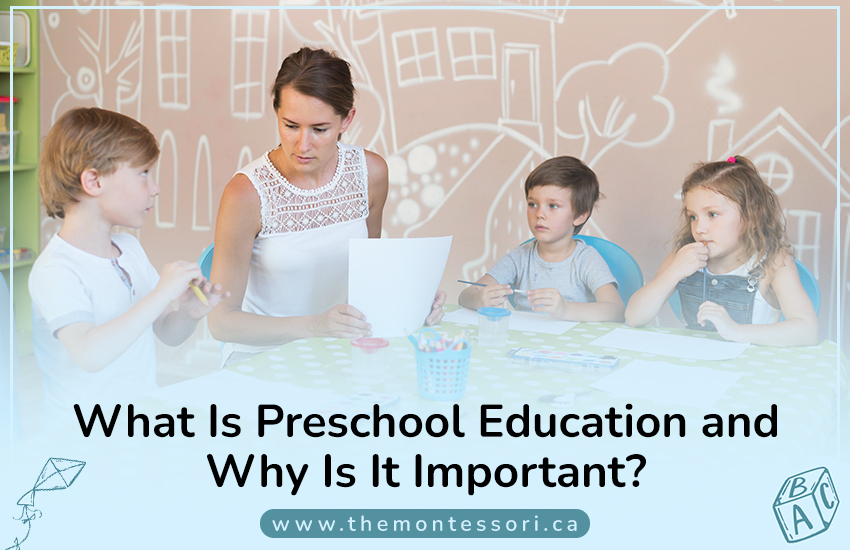
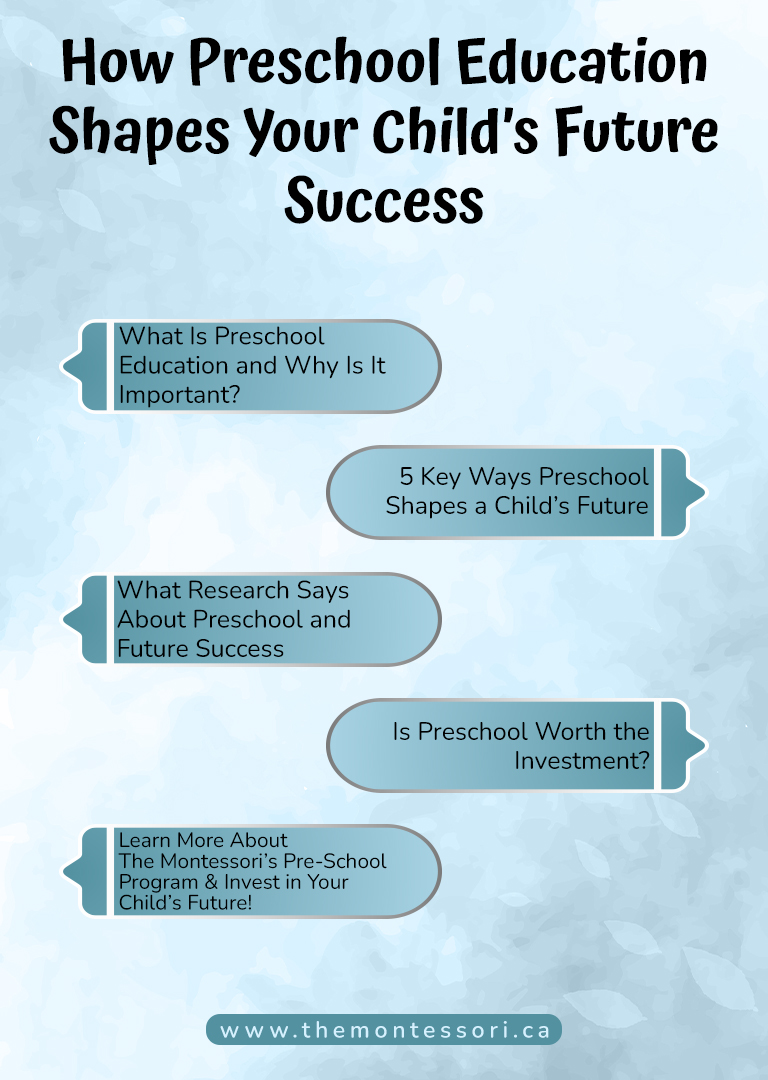
What Is Preschool Education and Why Is It Important?
People often misunderstand preschool education as a safe place for children to spend time while parents are at work. The reality is quite opposite. A quality preschool program is a carefully structured learning environment built around a child’s developmental stage, where every activity, material, and routine has a purpose.
Scientists have found that young children go through special “windows of time” when their brains are extra ready to pick up certain skills, like language, numbers, and social behaviour. A good preschool takes advantage of these windows by giving kids the right experiences at the right time. When this happens, learning feels easy and natural. Miss this window, and those same skills become much harder to build later.
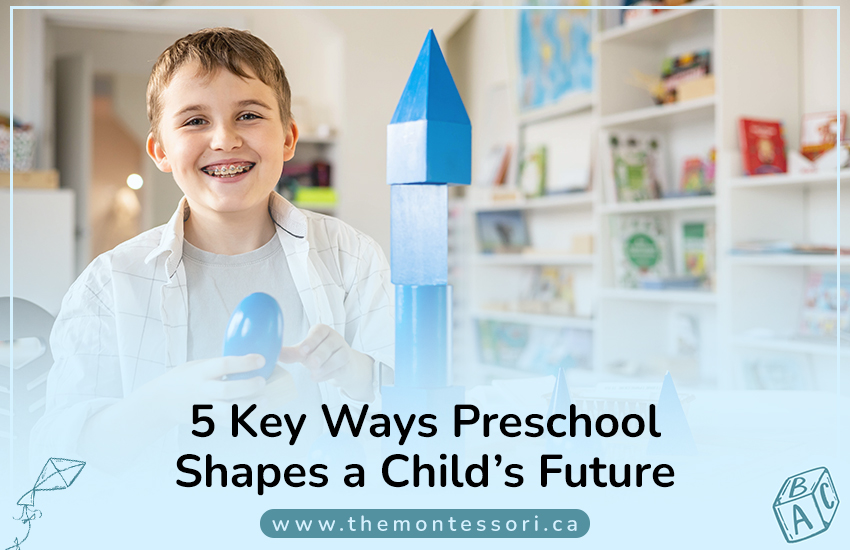
5 Key Ways Preschool Shapes a Child’s Future
Preschool does a lot more than teach the alphabet or basic counting. It shapes how a kid thinks, connects with others, handles challenges, and approaches life. Here are five big ways that starting preschool early makes a real difference, not just now, but for years to come.
Builds Strong Cognitive Foundations
A good preschool helps children learn how to focus, solve problems, and understand ideas, not just memorise facts. Kids use physical materials, like beads and tiles, to understand maths before they ever write a number. This makes learning stick because they truly understand it, not just remember it for a test.
- Children learn through hands-on activities, developing stronger memory and better problem-solving skills.
- They remember and use what they’ve discovered far better than what they’ve simply been told.
- Early exposure to numbers, language, and science through play builds natural curiosity that keeps kids eager to learn.
Develops Social and Emotional Intelligence
For many children, preschool is the first time they spend time with other kids outside their family. They learn to share, take turns, make friends, and work through disagreements. These skills are incredibly important for success in school and in life.
- Younger kids learn to be patient and helpful, building empathy and leadership at the same time.
- Children who learn to handle their emotions early are less likely to have behavioural struggles in school later on.
- Skills like patience, kindness, and managing frustration, learned in preschool, help kids build stronger friendships and handle stress better.
Encourages Independence and Confidence
In preschool, children get to make real choices. What to work on, how to organise their space, and how to complete tasks on their own. This gives them a wonderful feeling: “I can do this!” That kind of real confidence, earned through actual effort, is very different from just being told “great job,” which stays with kids.
- When children are trusted and given the freedom to take charge of their own learning in a safe environment, they develop a natural drive to learn and improve.
- Making decisions on their own teaches kids to be confident, take initiative, and not give up when things get tough.
- Everyday tasks like tidying up, dressing independently, and caring for their classroom give children a sense of responsibility that carries into everything they do.
Improves Academic Readiness
Kids who go to preschool know how to learn. They can listen, follow instructions, sit with a task, and work alongside others. Many children naturally begin reading and writing, in both cursive and print, long before they enter formal school, not because they’re pushed, but because they’re ready.
- Preschool graduates regularly show stronger reading and maths skills in early primary school, and studies show these advantages continue right through high school.
- Skills built in preschool, like learning how to pay attention, plan, and stay on task, are the biggest predictors of how well a child will do in school.
- Children who already know how a classroom works can spend their energy actually learning, rather than adjusting to a brand-new environment.
Enhances Focus and Discipline
In a world full of screens and constant distractions, the ability to focus deeply is a superpower. Preschool, especially a Montessori preschool, actively builds this skill. Kids have long, uninterrupted stretches of time to choose an activity and stick with it until they’re done. Over time, their ability to concentrate grows stronger and stronger, and so does their self-discipline.
- The Montessori three-hour work cycle trains children to concentrate deeply, developing focus abilities well beyond what is typical for their age.
- Kids who learn self-discipline early are less likely to be disruptive in school, which means a better experience for them and everyone around them.
- Simple routines, finishing a task, putting things back, choosing what’s next, teach children the habits of organisation and follow-through.
What Research Says About Preschool and Future Success
Researchers have been studying the effects of early education for decades. The results are remarkably consistent. Kids who attend good preschool programs grow up to do better in school, at work, and in their personal lives.
- Higher academic performance: Preschool-educated children score better throughout primary and high school.
- Better social outcomes: These kids are better at making friends, working in teams, and handling disagreements.
- Long-term career and behavioural benefits: The Perry Preschool Project found that adults who attended quality preschool were more likely to hold steady jobs, earn better wages, and live more stable lives.
- Stronger mental health and emotional regulation: Children with preschool experience show lower rates of anxiety and behavioural problems as teenagers.
- Reduced likelihood of grade repetition and dropout: Kids who start school well-prepared are far less likely to fall behind, repeat grades, or lose interest in education altogether.
- Greater civic participation and community engagement: Preschool-educated adults are more likely to vote, volunteer, and give back to their communities.
Is Preschool Worth the Investment?
When you look at the numbers, the answer is a clear yes. Economists who study early childhood education, including Nobel laureate James Heckman, have calculated that every dollar invested in quality early education generates between seven and thirteen dollars in future societal returns through less need for tutoring and remedial support, fewer academic struggles, and better opportunities later in life.
The reason early investment works so well is that young children’s brains learn faster and more efficiently than at any other point in life. Skills that come naturally at age four can take years of hard work to build at age ten. When you invest in quality preschool, you give your child a head start that compounds over time, making every stage of learning easier, more enjoyable, and more successful.
Learn More About The Montessori’s Pre-School Program & Invest in Your Child’s Future!
Your child is growing and learning every single day — right now. The ages of three to six are a once-in-a-lifetime opportunity to build the skills, habits, and confidence that will carry them through school and beyond. We’d love to show you what The Montessori’s Pre-School Program looks like in action.
Come visit us and feel the difference for yourself. We are here to partner with you in this incredible journey of parenthood. Your child’s future is bright, and it starts with the very first step into a classroom that truly cares.
Frequently Asked Questions
What are the learning outcomes for preschoolers?
The desired outcomes of preschool education focus on holistic development, preparing children for school and life through social-emotional, cognitive, and physical growth
Why are early childhood experiences crucial for children’s future?
They are crucial because 90% of brain growth occurs during this period, forming over one million new neural connections every second.
What are the benefits of early childhood education?
- Improved academic readiness
- Higher graduation rates
- Better mental/physical health
- Enhanced socialization
- Increased long-term earning potential
How is preschool education viewed in Canada?
In Canada, preschool is viewed as an essential public good, with the government working toward a nationwide ten-dollar-a-day system to make high-quality learning accessible to every family.