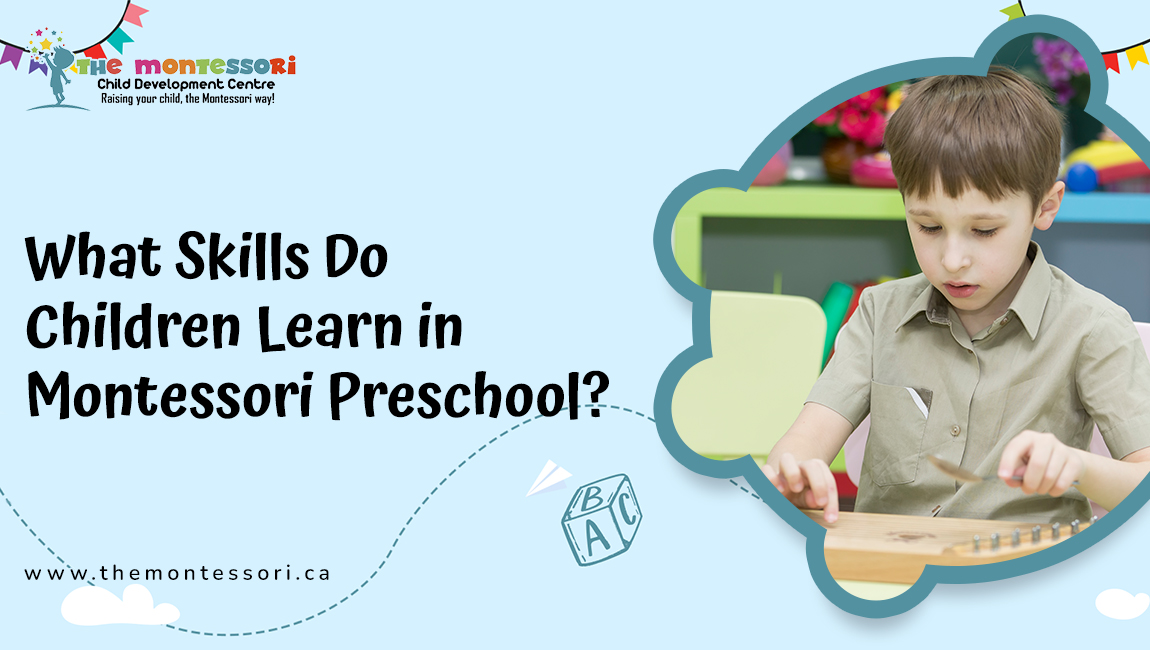
You look at your three-year-old and see a tiny person bursting with questions. It is a time when the brain works like a sponge and soaks up every interaction. How that natural curiosity is guided during these early years shapes the confidence and love for learning of a child. This is where Montessori preschool stands out, offering an environment to nurture that growth in a meaningful way.
Now, you may be thinking what exactly happens inside those classrooms with the wooden materials and quiet atmosphere. It is more than just learning the ABCs or counting to ten. The curriculum focuses on building a whole individual who feels capable of handling their own needs. We see children who once struggled with a zipper suddenly shining with fulfillment because they did it themselves without any help.
These skills aren’t just for school. They are for life. Parents choose this path because it offers a bridge between home and the bigger world. It gives your child the tools to handle big feelings and small tasks with equal ease.
Why Skill Development Matters in Early Childhood
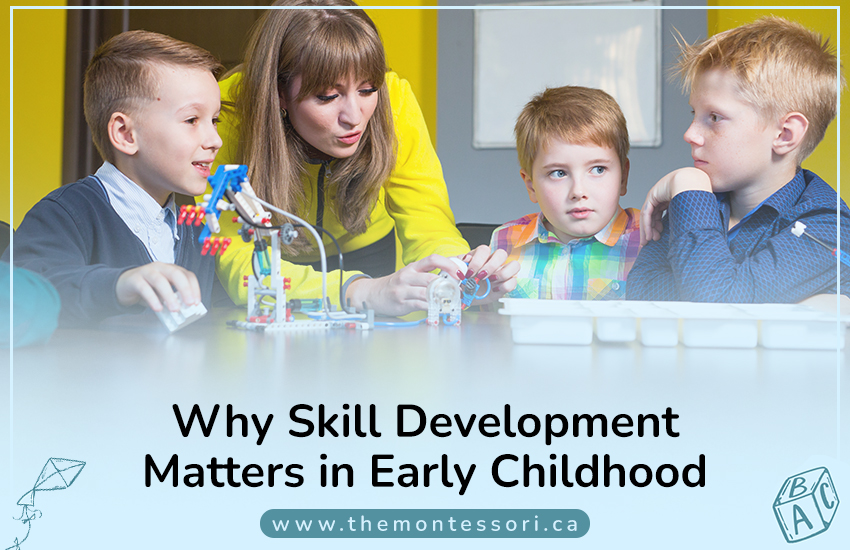
The years between ages three and five are often called the “Golden Age” of learning. This window is unique because the child is naturally driven to repeat tasks until they are perfect. If we miss this phase, learning becomes much more of a chore later in life.
Early skills act as a sturdy foundation for everything that follows in Grade 1. A child who learns how to focus on a single task now will have an easier time with complex math in the future. It isn’t just about the knowledge they gain, but how they learn to think about new challenges they face.
5 Ways Montessori Preschool Differs from Traditional Learning
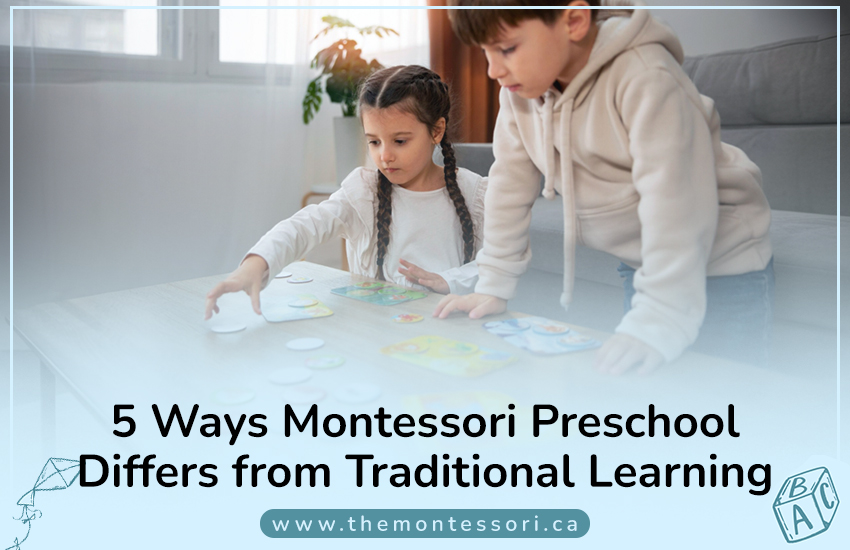
Traditional schools often follow a rigid schedule where every child must do the same thing at once. Montessori takes a different route by following the child’s natural pace and interests. This creates a classroom that appears more like a busy workshop than a lecture hall.
- Child-ed vs Teacher-Led Learning
- Hands-On Learning vs Passive Instruction
- Individual Growth vs One-Size-Fits-All
- Mixed-Age Socializing (Older children help younger ones)
- Prepared Environment (Everything is within the child’s reach)
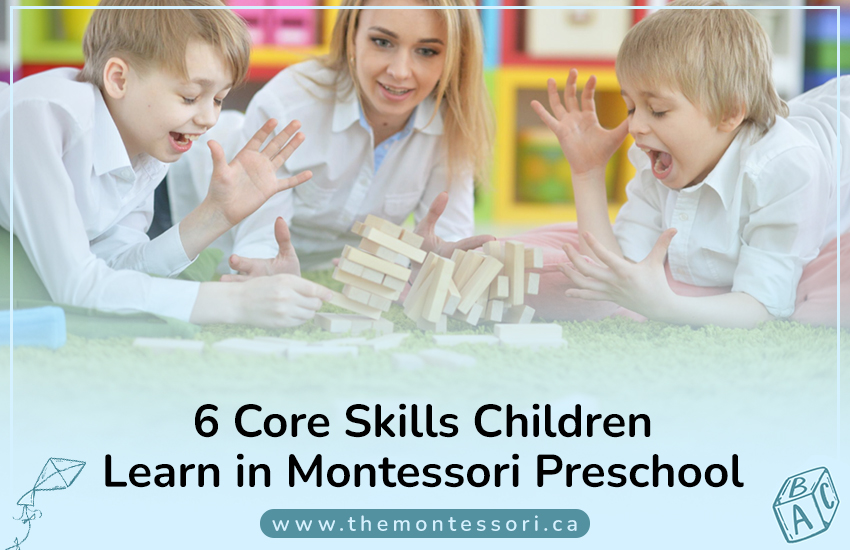
6 Core Skills Children Learn in Montessori Preschool
Each area of the classroom helps a child build a specific set of abilities. These aren’t isolated lessons but interconnected pieces of a larger puzzle.
1. Independence and Self-Reliance
A child who can take care of their own needs learn that they don’t always need an adult to solve their problems or fetch their supplies. This confidence spills over into every other part of their life.
- Choosing their own work activities
- Cleaning up their space independently
- Problem-solving without immediate adult help
2. Practical Life Skills
These activities might look like simple chores to an adult. But when it comes to kids, they are essential. Pouring water or polishing wood helps them understand order and sequence. It makes the “real world” feel accessible and manageable.
- Preparing healthy snacks alone
- Fastening buttons and zipping coats
- Watering plants and caring for the room
3. Cognitive and Problem-Solving Skills
Using physical materials to represent abstract concepts is a hallmark of this method. Instead of just memorizing numbers, a child feels the weight and quantity of them. They learn to analyze a situation. Then, they try different solutions until they find what works.
- Categorizing objects by shape or color
- Completing complex puzzles and patterns
- Sequencing stories or scientific cycles
4. Language and Communication Skills
Vocabulary grows when children are encouraged to speak about their work. We focus on phonetic sounds rather than just letter names. It makes reading a natural next step. Communication is treated as a tool for connection and expression.
- Identifying letter sounds through sandpaper letters
- Expressing needs clearly to peers
- Building stories with the movable alphabet
5. Social and Emotional Skills
Learning to share a space with others requires a lot of practice. Children learn how to wait for a turn with a specific material and how to resolve a conflict using words. They develop empathy by watching how their actions affect their friends.
- Practicing grace and courtesy daily
- Resolving disagreements through peaceful talk
- Supporting younger classmates with tasks
6. Fine Motor and Coordination Skills
Holding a pencil starts with strengthening the hand muscles through other activities. Many of the “toys” in the classroom are actually tools to help with grip and precision. Balance and body awareness also improve through movement-based lessons.
- Using tongs to move small beads
- Walking carefully around floor mats
- Tracing shapes with controlled movements
How These Skills Prepare Children for School and Life
When entering elementary school, these children usually have a much easier transition. They are already used to managing their time and looking after their belongings. Teachers often notice that Montessori kids are the ones who stay calm and focused when the classroom gets busy.
This early exposure builds a level of confidence that stays with them forever. They don’t fear new learning environments because they know they have the skills to figure things out. This long-term advantage means they often stay ahead in academics and social leadership.
5 Things to Look for in a Montessori Preschool Program
Finding the right spot for your child means looking past the surface. You want a place that feels authentic and supportive of every child’s unique path. Here are a few markers of a high-quality program in Edmonton.
- Certified educators: Teachers should have specific training that focuses on observation and guidance.
- Structured environment: The room needs to be orderly so children can find their materials without confusion.
- Child-focused curriculum: Activities should change based on what the children are currently interested in.
- Authentic materials: Look for wooden blocks and real glass rather than cheap plastic toys.
- Open communication: The school should regularly update you on your child’s progress and daily wins.
Let Your Child Develop These Essential Life Skills Early with the Montessori Pre-School Program!
We believe every child has a natural light that just needs the right space to shine. At the Montessori Daycare, we provide that space every single day. We watch as toddlers grow into confident preschoolers who are ready for the world.
Our pre-school program is where this growth happens most visibly. Your child will work with materials that make sense to them while being supported by staff who truly care. It is a community built on respect and the joy of discovery.
Give your child the gift of a head start that focuses on their whole personality. Reach out to us today to see our classrooms in action. We would love to show you how we help the leaders of tomorrow find their footing today.
Frequently Asked Questions (FAQs)
Q1. What do kids learn in Montessori preschool?
Independence, concentration, foundational academic skills, practical life skills like dressing & cleaning, sensorial refinement like sorting & classifying, literacy, math using concrete materials, and cultural studies like geography & science.
Q2. Why are life skills important in early childhood?
Life skills matter because they build emotional resilience and promote cognitive development.
Q3. What social skills do children learn in Montessori?
They learn to collaborate, communicate needs effectively, resolve conflicts peacefully, and practice grace and courtesy.
Q4. Do Montessori students perform better in school later?
Research suggests Montessori students often perform better or equal to peers in traditional schools, showing higher academic achievement in math and reading, stronger social-emotional skills, and better executive function, especially by kindergarten.