Watching your toddler try to put on their own socks is a scene of pure concentration. It often ends in a tiny triumph or a request for help. In a Montessori setting, we don’t rush that moment. We let them sit with the challenge because that struggle is where the real learning happens.
Montessori is more than just learning colors or identifying shapes. They are finding out that they are capable people. They can contribute to their community. They discover that their hands can do amazing things like pour juice or scrub a table. It builds a sense of self that stays with them long after they leave our daycare in Edmonton.
We focus on the natural rhythm of a child. They do not just sit at desks waiting for instructions. Rather, they move through a room filled with tools that match their size and their current interests. Every shelf offers a new chance to practice a skill. It helps them make sense of their world.
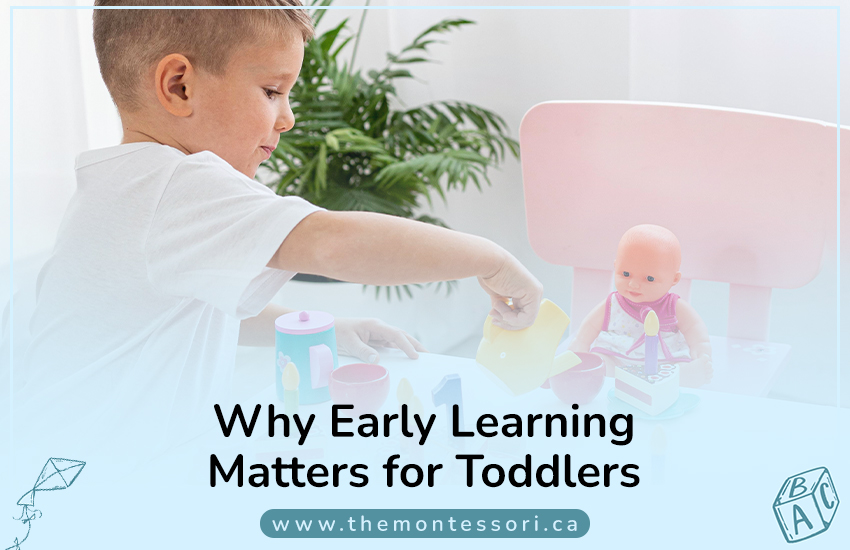
Why Early Learning Matters for Toddlers
The period between age one and three is often called the “absorbent mind” phase. During these years, the brain creates millions of neural connections every single second. It is a biological window that never stays open this wide again. When a child is in a setting that encourages active exploration, those pathways become strong. If they spend these years in front of screens, those potential connections might fade away.
These early experiences stay with a person forever. If a toddler learns that their efforts lead to success, they develop a “growth mindset” naturally. They don’t fear mistakes because they have spent years trial-and-erroring their way through Montessori “work.” This early sense of security and competence dictates how they will face challenges in kindergarten plus grade school. It is the literal construction of their cognitive architecture.
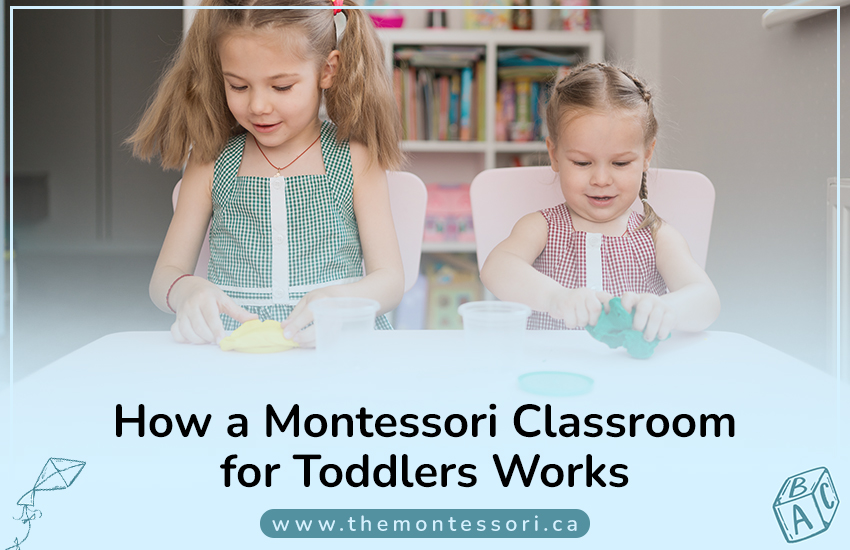
How a Montessori Classroom for Toddlers Works
Imagine a room where everything is at eye level for a tiny person. There are no “no-touch” zones because every object is meant to be explored. This child-led environment allows toddlers to follow their own instincts rather than a rigid schedule. They choose what to work on. It builds a deep sense of focus that is rare in traditional settings.
Teachers in our Edmonton centre act as observers rather than lecturers. They step in when a child needs a gentle nudge. However, they stay back when a child is focused on a task. This hands-on approach ensures that the child is the active driver of their own education. It creates a calm atmosphere where toddlers feel respected and heard.
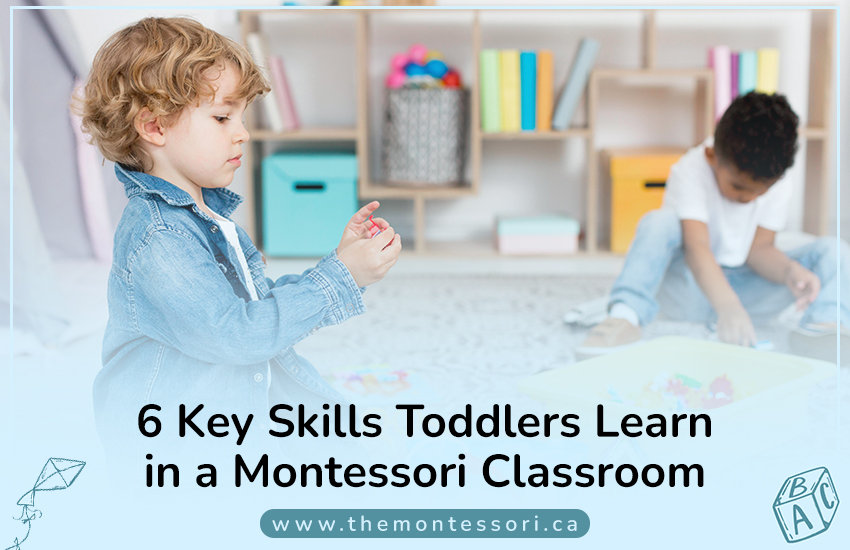
6 Key Skills Toddlers Learn in a Montessori Classroom
These skills are the building blocks of a confident personality. We see toddlers transform from dependent babies into little leaders who take pride in their work.
1. Independence and Self-Care Skills
Learning to manage your own body is the first step to confidence. We teach them how to wash their hands or choose their own snacks. This reduces the frustration that often leads to tantrums because they feel in control.
- Dressing themselves with simple fasteners
- Putting away their own outdoor gear
- Choosing activities without needing a prompt
2. Practical Life Skills
These are the skills that make a child feel like a real member of the family. They learn that their contributions matter to the group. It turns daily chores into a source of immense pride and joy.
- Wiping up a spill with a small sponge
- Using a dustpan to clear crumbs
- Preparing a simple snack like a banana
3. Language Development
We speak to toddlers with a real, rich vocabulary. We don’t use “baby talk” because we know they are ready to name the specifics of their world. This builds a strong base for reading plus writing later on.
- Learning the specific names of kitchen tools
- Expressing emotions with clear words
- Following multi-step verbal directions
4. Fine Motor and Coordination Skills
Strengthening the small muscles in the hands is preparation for writing. Every time they use tongs or a dropper, they are training for a pencil. It is about precision and control of their own movements.
- Using a small pitcher to pour water
- Threading large beads onto a string
- Using a spoon to move beans between bowls
5. Sensory Refinement
Toddlers experience the world through their senses. We give them materials that vary in texture, weight, plus sound. This helps them organize the massive amount of information they receive from the environment.
- Matching pairs of scent bottles
- Feeling the difference between rough and smooth
- Identifying sounds in a matching game
6. Cognitive and Problem-Solving Skills
Thinking through a task requires focus and logic. If a tower falls, we ask what happened instead of just fixing it for them. This builds a resilient mindset that isn’t afraid to try again.
- Sorting objects by size or shape
- Completing simple wooden puzzles
- Finding the right lid for a container
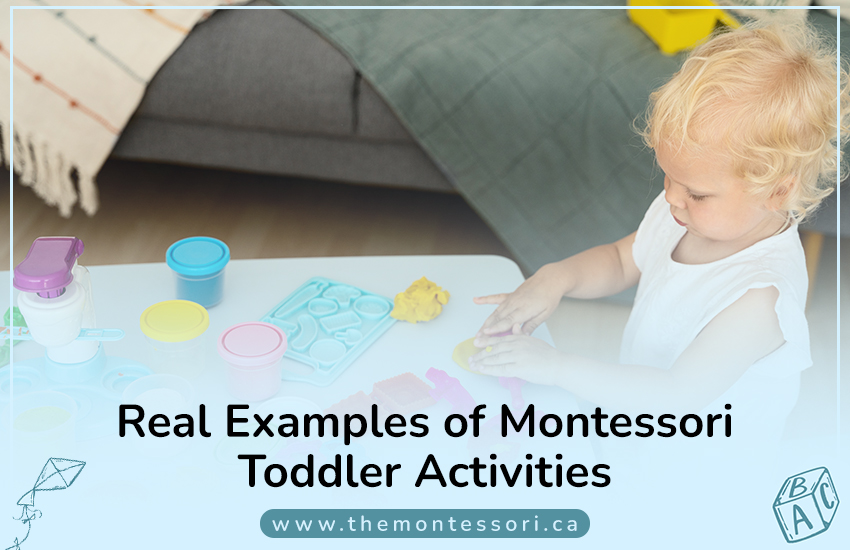
Real Examples of Montessori Toddler Activities
You might see these activities and think they look like play, but for a toddler, this is serious work. It requires focus plus a lot of repetition to get it right. These tasks are the heartbeat of our daily routine.
- Pouring water between cups to learn volume
- Sorting objects by color or shape for logic
- Cleaning up toys to practice responsibility
- Group interaction exercises to build social grace
- Peeling a hard-boiled egg for fine motor control
- Matching animal figures to picture cards for vocabulary
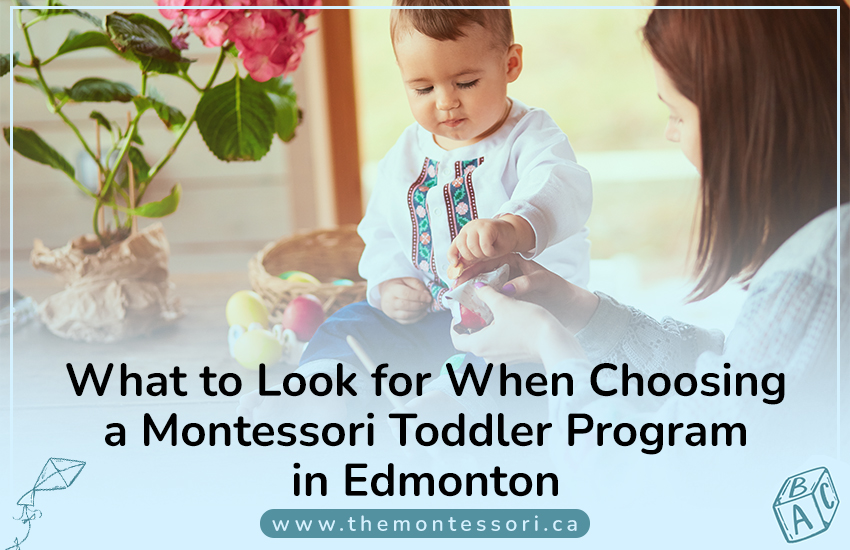
What to Look for When Choosing a Montessori Toddler Program in Edmonton
Not every daycare that uses the name is following the true philosophy. You want a place that feels like a home away from home. The right program will prioritize the child’s needs over a standardized clock.
- Trained educators who respect the child’s pace
- Safe plus structured environment for exploration
- Individual attention for every student in the room
- Materials made of wood or glass rather than plastic
- A calm atmosphere without loud music or flashing lights
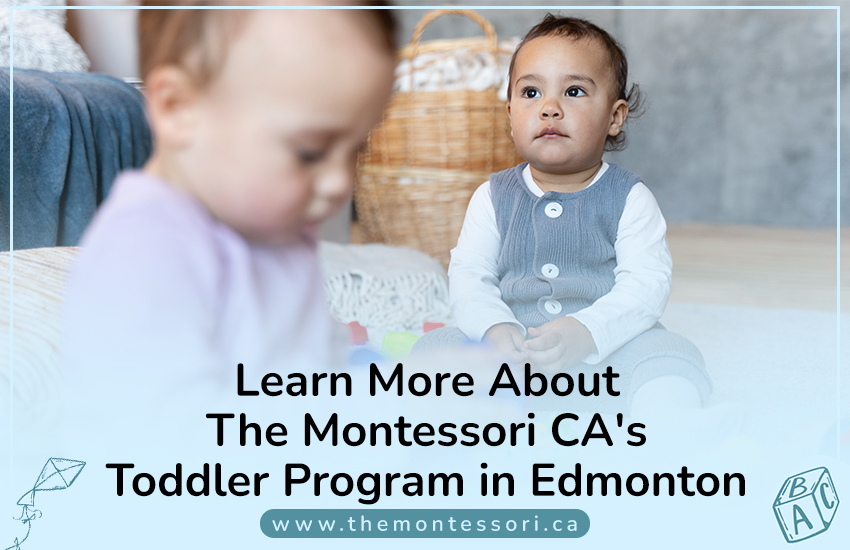
Learn More About The Montessori CA’s Toddler Program in Edmonton
Our Edmonton centre is a place where your child’s natural curiosity is celebrated every day. We know how hard it is to leave your little one. So, we build a partnership based on trust. You will see your child grow in ways you didn’t think were possible at such a young age.
Our toddler program provides the exact tools your child needs during this peak learning window. We keep our groups small to ensure every child receives the care they deserve. This is where they start their path to becoming confident and kind people.
Contact us today to come and see our classroom for yourself. Witness how a room full of toddlers can be a peaceful plus productive space. We are here to support your family as your child discovers what they are capable of doing.
Frequently Asked Questions (FAQs)
Q1. Do toddlers really learn in Montessori or just play?
Toddlers learn through purposeful activity. Their play is actually work that builds cognitive and motor skills. They use specific tools to master real-life tasks.
Q2. How do Montessori teachers teach toddlers?
Teachers act as guides who prepare the environment. They observe each child and offer the right tool at the right time. They show a skill and then step back to let the child practice.
Q3. Is Montessori better than daycare for toddlers?
Montessori focuses on self-directed growth and life skills. It offers a structured path for independence. Traditional daycare focuses more on general play and supervision.
Q4. What skills should a 2-year-old learn in Montessori?
They should learn to care for themselves and their space. They develop fine motor control, and also build their vocabulary & learn to work with others.